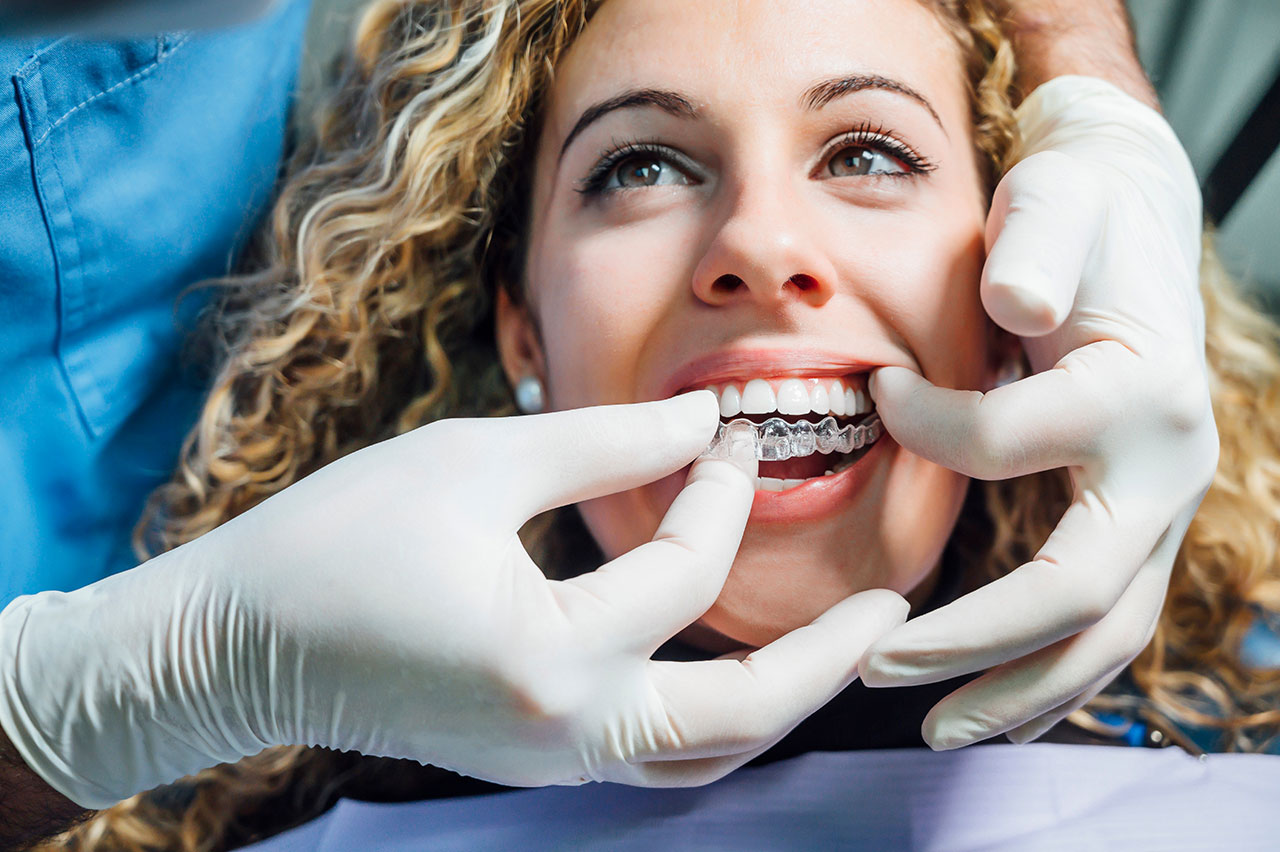
A straighter smile can change more than the way your teeth look. It can make brushing easier, improve the way your bite feels, and help protect your teeth from uneven wear. Yet many adults and teens hesitate to consider orthodontic care because they picture metal brackets and wires. Invisalign clear aligners offer another possibility, one that fits more quietly into school, work, meals, and everyday life.
Patients interested in discreet orthodontic treatment can learn more about the orthodontic services available at Dentistry by Design. A personal evaluation is important because every smile moves differently. The shape of the jaw, position of the teeth, health of the gums, and condition of the bite all help determine whether clear aligners are a suitable choice.
Invisalign clear aligners use a planned series of removable trays to guide teeth into better positions. Each aligner is shaped a little differently from the one before it. As patients move through the series, the trays apply controlled pressure to selected teeth. Those small movements add up over time.
The aligners are made from clear, smooth plastic and are created to fit closely over the teeth. They do not contain the brackets or wires used with traditional braces. Although the trays are not completely invisible, they tend to be difficult to notice during normal conversation. This is one reason Invisalign clear aligners appeal to adults, working professionals, college students, and image-conscious teens.
Treatment begins with a careful examination. The dentist studies the teeth, bite, gums, and supporting bone. Digital images, scans, photographs, or X-rays may be taken when needed. This information helps create a treatment plan that maps out how the teeth should move and how long the process may take.
Patients usually wear their aligners for about 20 to 22 hours each day, following the schedule provided by the dentist. The trays come out for meals, drinks other than plain water, brushing, and flossing. Depending on the treatment plan, a patient may change to a new set every week or two. Regular progress visits allow the dentist to confirm that the teeth are responding as expected.
Invisalign clear aligners can address many common orthodontic concerns. They may be used for crowded teeth, small gaps, crooked teeth, and certain bite problems. Some patients want to improve one noticeable area, while others need broader correction across the upper and lower arches.
Crowding happens when there is not enough room for the teeth to sit in proper positions. Teeth may overlap, twist, or lean forward and backward. Besides changing the appearance of the smile, crowding can create tight spaces where plaque and food collect. Straightening these areas may make daily cleaning more manageable.
Spacing is the opposite concern. Gaps may develop because teeth are small compared with the jaw, certain teeth are missing, or teeth have shifted over time. Closing suitable spaces can create a more even appearance and reduce places where food becomes trapped.
Clear aligners may also help with an overbite, underbite, crossbite, or open bite in selected cases. These issues describe how the upper and lower teeth meet. A bite problem can sometimes contribute to uneven tooth wear, chewing trouble, or strain in the jaw. However, not every bite concern can be corrected with aligners alone. More involved conditions may require another form of orthodontic care or a combined treatment plan.
One of the greatest advantages of Invisalign clear aligners is flexibility. The trays are designed to work around a patient’s routine while still providing steady tooth movement. Patients must wear them consistently, but they can briefly remove them when eating and caring for their teeth.
These advantages do not make treatment effortless. Clear aligners depend heavily on patient cooperation. A tray sitting in its case cannot move teeth. Consistent wear is what keeps treatment moving forward, and missed hours can add up quickly.
The first few days with a new set of aligners may feel unusual. Patients often notice pressure around certain teeth, especially after switching trays. That pressure is a sign that the aligners are doing their job. It usually becomes milder as the teeth adjust.
Speech may sound slightly different at first. The tongue needs a little time to get used to the trays. Most patients adjust after speaking normally for a few days. Reading aloud at home can help the change feel more natural.
Meals are fairly simple because the aligners are removed before eating. Patients should store them in their case rather than wrapping them in a napkin, where they can be forgotten or thrown away. Before putting the trays back in, it is wise to brush the teeth or at least rinse the mouth when brushing is not possible.
Drinking plain water while wearing Invisalign clear aligners is generally fine. Hot drinks can distort the plastic, while coffee, tea, soda, and colorful beverages may stain the trays or trap sugar against the teeth. Removing the aligners before these drinks helps keep them clear and protects the enamel.
The trays also need daily care. They can be gently cleaned with a soft toothbrush and cool or lukewarm water. Hot water should be avoided because it may change their shape. Toothpaste can be too abrasive for some aligners, leaving tiny scratches that make the plastic appear cloudy.
Some patients need small tooth-colored attachments placed on selected teeth. These tiny shapes give the aligners a better grip and help create more precise movement. They are bonded to the front of the teeth and removed after treatment. Although attachments can make the trays slightly more noticeable, they often improve what clear aligners can accomplish.
Elastic bands may be recommended when a bite needs extra guidance. A patient might also need minor reshaping between certain teeth to create room for movement. These steps are planned carefully and are not required for everyone.
Near the end of the first aligner series, the dentist will evaluate the result. Teeth do not always move exactly as a digital plan predicts. Biology has a say in the process. If a few teeth need additional guidance, a new scan may be taken and refinement aligners may be ordered. Refinements are a normal part of many successful cases.
A good candidate for Invisalign clear aligners has healthy teeth and gums, an orthodontic issue that can be treated with trays, and the ability to follow the wear schedule. Teens must be responsible enough to keep track of their aligners and wear them as directed. Adults need the same commitment, even when work, travel, and family life get busy.
Active cavities and gum disease generally need to be treated before orthodontic movement begins. Moving teeth while the supporting tissues are unhealthy may create unnecessary risks. A dental exam gives the dentist a chance to address these concerns first.
Patients with crowns, bridges, implants, or previous dental work may still qualify. Their plans simply require added care. Dental implants do not move like natural teeth, for example, so the position of an implant must be considered when planning nearby tooth movement.
Clear aligners may not be the right answer for every complex rotation, severe bite issue, or major jaw concern. The most helpful treatment is the one that can predictably address the actual problem, not merely the one that sounds most convenient. A professional assessment can explain the realistic choices.
Treatment time depends on the starting position of the teeth and the amount of movement required. A limited case may take several months, while broader correction may take a year or longer. Wearing the trays as directed is one of the biggest factors a patient can control.
Switching aligners too soon does not safely speed up the process. Teeth need time to move, and the bone around them needs time to adjust. Skipping ahead can lead to poor tray fit and less predictable results. Patients should follow the schedule given by their dental provider.
After active treatment, retainers help hold the teeth in their new positions. Teeth have a natural tendency to shift, particularly during the months after orthodontic care. Retainer wear protects the time and effort invested in the smile. It is not an optional extra. It is the maintenance phase of treatment.
Invisalign clear aligners can offer a comfortable, subtle, and practical way to straighten suitable smiles. The trays are removable, but treatment still calls for discipline. Daily wear, good oral hygiene, proper tray care, and regular dental visits all work together to support a successful result.
The first step is not ordering a set of trays. It is finding out what your teeth and bite truly need. A detailed evaluation can show whether Invisalign clear aligners are appropriate, what the process may involve, and what kind of result is realistic.
Ready to learn whether clear aligner treatment fits your smile goals? Contact Dentistry by Design of South Plainfield at 732-314-0829 to schedule a consultation with Dr. Marciano at 295 Durham Ave, Building 7, Suite B, South Plainfield, NJ 07080.