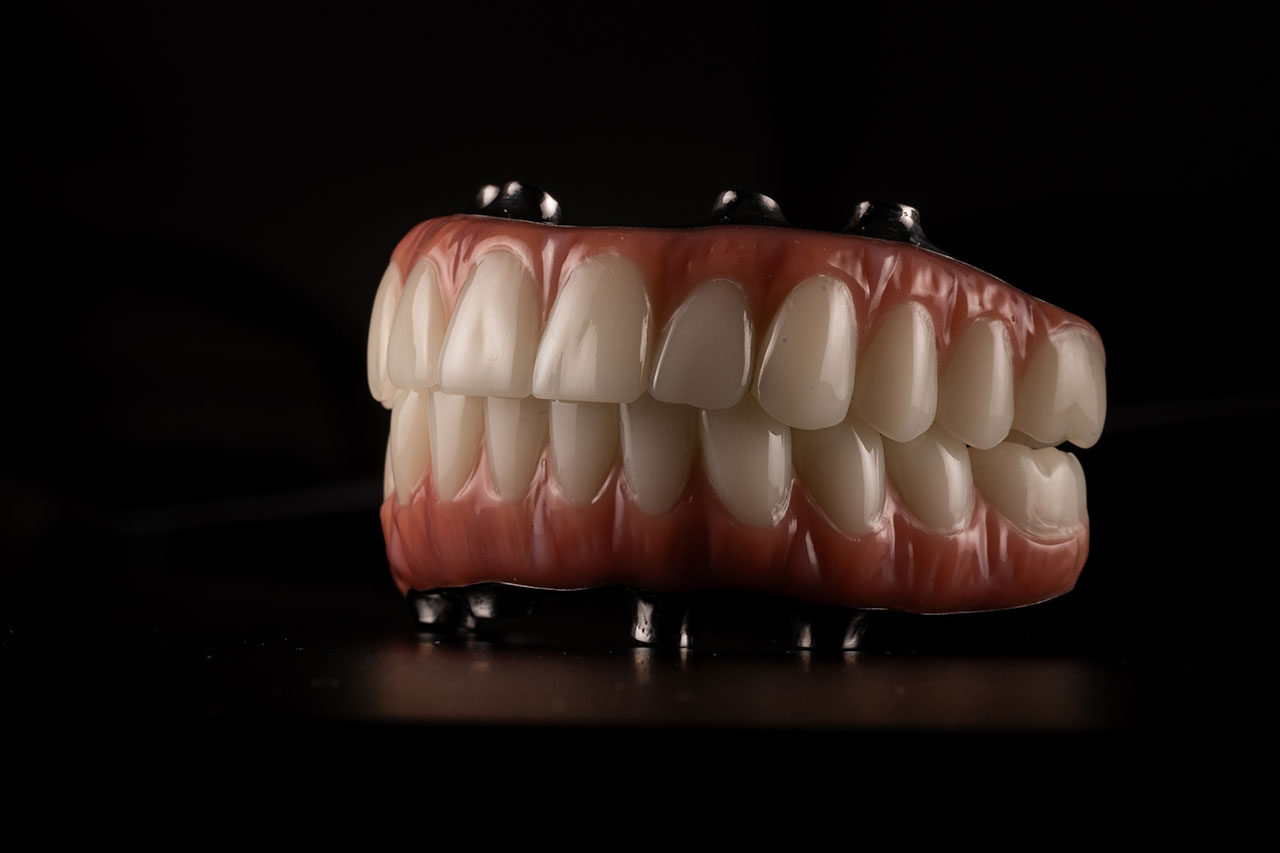
A removable denture should help make meals, conversations, and daily routines easier. When it shifts during chewing or feels loose while speaking, however, the patient may start planning around the denture instead of simply living with it. Snap-in dentures offer a more stable alternative by attaching a removable restoration to dental implants placed in the jaw.
Snap-in dentures combine the broad tooth replacement of traditional dentures with added support from dental implants. They are still removed by the patient for cleaning, but small attachments help hold them in position throughout the day. For many patients, that added security can make eating, speaking, and smiling feel more natural.
Snap-in dentures are removable replacement teeth that connect to dental implants. They are also known as implant-retained dentures, overdentures, or implant-assisted dentures. Although the names vary, the basic idea remains the same. Dental implants provide secure anchor points, and the denture contains matching attachments that fit onto them.
The patient gently presses the denture into position, where it connects with the implant attachments. Depending on the design, the connection may create a noticeable snap or a firm seated feeling. At night or during daily cleaning, the denture can be removed without visiting the dental office.
A conventional denture relies mainly on the gums, natural suction, facial muscles, and sometimes adhesive. Snap-in dentures gain additional support from implants. This can reduce sliding, lifting, or rocking during normal activities.
The number and placement of implants vary. Some lower snap-in dentures are supported by two implants, while other designs use additional implants for greater support. Upper dentures may have different requirements because the bone and forces in the upper jaw are not the same as those in the lower jaw.
Only an examination and detailed imaging can determine the appropriate design. More implants do not automatically make a plan better. The goal is to create dependable support based on the patient's anatomy, health, bite, and needs.
Traditional dentures have helped generations of patients replace missing teeth. A well-made denture can restore appearance, basic chewing function, speech support, and facial shape. Still, removable dentures can become loose as the mouth changes.
After natural teeth are lost, the jawbone gradually shrinks because it no longer receives stimulation from tooth roots. The gums also change shape. Since a conventional denture rests on those tissues, its fit may become less accurate over time.
An upper denture often gains stability from suction across the palate. A lower denture presents a greater challenge because it rests on a smaller ridge and must share space with the tongue. Movements of the cheeks and tongue can lift or shift it.
Denture adhesive may help with minor movement, but it does not correct a poor fit or replace lost bone. A denture that suddenly becomes loose should be examined. It may need an adjustment, professional reline, replacement, or another treatment approach.
Snap-in dentures address movement by connecting the restoration to implants. The denture still rests partly on the gums in many designs, but the attachments help keep it from drifting out of position.
A dental implant is a small post, usually made from titanium, that is placed into the jawbone. During healing, the surrounding bone bonds with the implant. This creates a stable base for the denture attachments.
After healing, small connector pieces are attached to the implants. The underside of the denture contains corresponding components. When the denture is seated, those parts connect and hold it securely.
The attachment system is designed to allow removal. Patients should not need to struggle with the denture or use excessive force. The dental team demonstrates how to place and remove it safely.
Some implant dentures use individual locator-style attachments. Others connect to a bar that links the implants. These approaches distribute support differently and have separate cleaning needs.
The small retention inserts inside a snap-in denture can wear over time. If the denture no longer feels as secure as it once did, the inserts may need replacement. This is routine maintenance and does not necessarily mean there is a problem with the implants.
Treatment begins with an examination of the mouth, gums, bite, and any remaining teeth. Digital X-rays and three-dimensional imaging may be used to measure the jawbone and plan implant positions.
The dentist also reviews medical history, medications, tobacco use, and previous dental treatment. Conditions that affect healing should be discussed before treatment begins.
If damaged teeth remain, the treatment plan may include their removal. Some patients can use a temporary denture during healing. The exact sequence depends on the condition of the mouth and the proposed implant placement.
The implant procedure is performed after the area is numbed. Each implant is placed into a planned location within the jaw. Mild swelling, tenderness, or bruising can occur afterward, and patients receive instructions for meals, cleaning, and activity.
The implants usually need several months to bond with the bone. This step is important because the implants must become stable before they manage regular pressure from the denture.
Once healing is complete, the connector parts are attached. An existing denture may sometimes be modified to work with the implants if its fit, condition, and design are suitable. In other situations, a new denture is made.
The new restoration is checked for fit, bite, appearance, and attachment strength. Follow-up visits allow the dentist to adjust pressure areas and make sure the patient can remove, insert, and clean the denture properly.
Snap-in dentures and fixed full arch restorations both use dental implants, but they function differently. A snap-in denture is designed for the patient to remove. A fixed implant restoration remains attached during daily life and is usually removed only by a dental professional.
Removability can be an advantage for patients who want easier access to the gums and implant attachments. The denture can be taken out, brushed, and cleaned from every side. However, it must be removed regularly, and many patients are advised not to sleep in it.
A fixed restoration may feel closer to natural teeth because it stays in place. It still requires careful cleaning underneath, which can be challenging for someone with limited hand movement or dexterity.
Snap-in dentures often use fewer implants than some fixed solutions, but the number varies. A patient's bone volume, bite strength, smile design, health, and personal preferences all affect the recommendation.
Neither choice is automatically right for everyone. The better option is the one that can be maintained safely and predictably while meeting the patient's functional goals.
Snap-in dentures may be considered for adults who are missing all or nearly all teeth in one arch. They may also help current denture wearers who want better stability, particularly in the lower jaw.
Candidates need enough healthy bone to support the implants. When bone has decreased, grafting may be discussed. In some cases, implants can be positioned in areas where useful bone remains.
Healthy gums are important. Active gum disease or oral infection should be treated before implants are placed. Patients also need to commit to daily cleaning and professional maintenance.
Smoking can slow healing and increase the chance of implant complications. Certain medical conditions and medications can also affect treatment. An honest health review helps the dentist recommend care responsibly.
Age alone is usually not the deciding factor. Overall health, healing ability, bone support, and willingness to maintain the restoration tend to matter more than the number of birthdays a person has celebrated.
Most patients need time to adjust to new replacement teeth. During the first days, softer foods are often more comfortable. Eggs, yogurt, cooked vegetables, fish, pasta, and other easy-to-chew choices can help the mouth adapt.
Food should be cut into smaller pieces, and chewing should be balanced between both sides. Biting directly into very hard food with the front teeth may place uneven pressure on the denture.
As comfort improves, more foods can be added according to the dentist's instructions. Snap-in dentures may offer stronger chewing than loose conventional dentures, but they are not designed for chewing ice, hard candy, or nonfood objects.
Speech may sound different at first. The tongue needs to learn the shape and position of the new teeth. Reading aloud for several minutes each day can speed up this adjustment. Speaking slowly and repeating difficult words may also help.
If the denture clicks, lifts, causes pain, or changes the bite, it should be checked. Small adjustments can often improve comfort without changing the entire restoration.
Daily cleaning is essential because plaque and food can collect around the implants, attachments, gums, and underside of the denture. Poor cleaning may cause irritation, odor, inflammation, or damage to the tissues supporting the implants.
Remove the denture as directed and rinse away loose debris. Brush it with a denture brush and a nonabrasive denture cleanser. Regular toothpaste may create scratches where bacteria and stains can collect.
The implant attachments inside the mouth should be cleaned gently. A soft toothbrush, interdental brush, flossing tool, or water flosser may be recommended. Patients should follow the specific method shown by their dental team.
The tongue, gums, and roof of the mouth also need cleaning. Gentle brushing encourages fresh breath and helps keep the tissues healthy.
Many patients should remove the denture during sleep so the gums can rest. Storage instructions vary by material, so the denture should be kept according to professional guidance rather than allowed to dry out.
Snap-in dentures need regular dental checkups even when they feel comfortable. The dentist examines the gums, implants, bite, denture base, and attachment parts. Professional cleaning removes buildup that may be difficult to reach at home.
Over time, the gum and bone shape may change. The denture may need a reline or adjustment so pressure remains evenly distributed. Worn attachment inserts can be replaced to renew retention.
Patients should call the dental office if an implant area becomes swollen, painful, or prone to bleeding. A loose implant, cracked denture, sudden change in fit, or damaged attachment also deserves prompt attention.
Home repair kits and household glue should not be used. These materials can damage the denture or make a professional repair more difficult.
Snap-in dentures provide a middle ground between conventional removable dentures and fixed implant-supported teeth. They remain removable for straightforward cleaning while using dental implants to improve stability during everyday activities.
The added support may reduce movement, improve chewing comfort, and lessen reliance on adhesive. Successful treatment still depends on careful planning, healthy gums, suitable bone, daily cleaning, and regular professional maintenance.
If a loose denture is limiting your meals or making daily conversations harder, it may be time to consider a more secure solution. Contact Dentistry by Design of Denville at 973-304-5029 to book an appointment with Dr. Marciano at 4 2nd Ave, Suite 206, Denville, NJ 07834, and find out whether snap-in dentures are right for you.