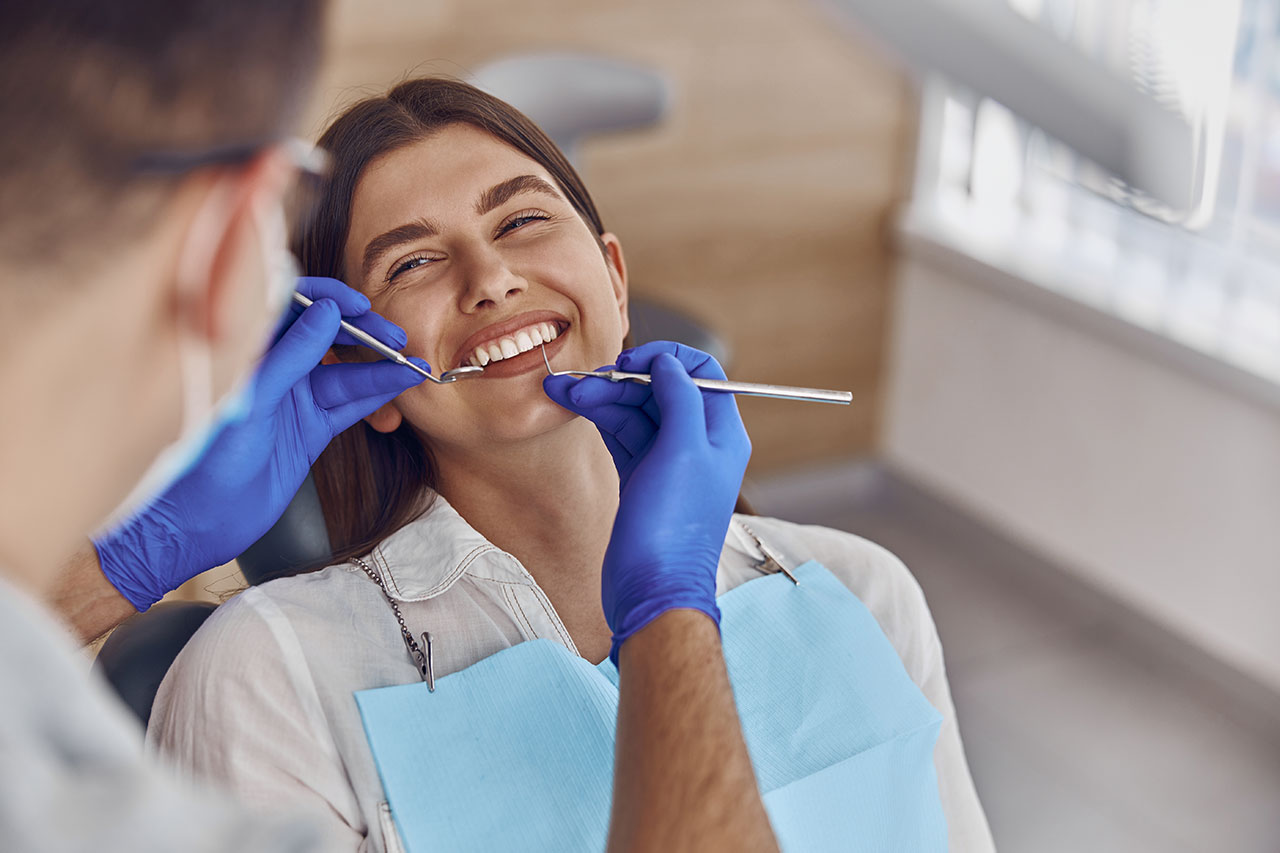
If your teeth feel fine, is there really much for a dentist to check? Quite a lot. Many dental problems begin quietly, which means discomfort is not always the first warning sign. Routine dental exams give your dentist an opportunity to evaluate teeth, gums, restorations, bite relationships, and other areas of the mouth before small changes have more time to progress.
A dental exam is also much more than a cavity check. Although identifying tooth decay is important, preventive dental care looks at the mouth as a connected system. For example, the dentist may evaluate whether an older filling is wearing down, whether gum tissue has changed, whether teeth show signs of excessive bite pressure, or whether a particular area needs closer monitoring.
Pain is useful because it can alert us that something is wrong. However, relying on pain as the only reason to visit a dentist can mean waiting until a dental problem has become more advanced.
Early tooth decay may not hurt. Gum problems can develop gradually. Small cracks may be difficult to notice. Likewise, a dental restoration may begin wearing down before it becomes uncomfortable.
Therefore, routine dental exams are designed to identify changes that patients may not notice during everyday life.
This preventive approach can make dental care more manageable. When a concern is identified earlier, the available treatment may sometimes be more conservative than treatment required after significant progression.
The exact sequence varies depending on the patient, dental history, and reason for the visit. However, several areas are commonly evaluated during a comprehensive dental examination.
Your dental team may ask about changes that have occurred since your previous appointment. New medications, recent dental symptoms, tooth sensitivity, grinding, clenching, dry mouth, or changes in general health can all provide useful information.
This conversation helps the dentist understand whether new factors may be influencing oral health or future treatment planning.
Individual teeth can be evaluated for visible signs of decay, fractures, cracks, unusual wear, or other structural changes.
Existing fillings, crowns, and other restorations may also be examined. Dental restorations are designed to be durable, but both the restoration and the natural tooth underneath can change over time.
Healthy gums are an important part of maintaining healthy teeth. Consequently, a dental examination may include checking for redness, swelling, bleeding, recession, or other changes in gum tissue.
Depending on the patient's needs, measurements around the teeth may also be taken to evaluate periodontal health more closely.
The way teeth come together can affect both comfort and long-term wear patterns. During a dental exam, the dentist may notice whether particular teeth appear to be absorbing excessive pressure or whether the bite seems to have changed.
This can be especially important for patients who clench or grind their teeth.
The lips, cheeks, tongue, palate, and other visible oral tissues may also be examined.
Patients should mention any persistent sore, lump, unusual color change, or area of irritation that has not resolved as expected.
A visual examination provides valuable information, but some portions of the teeth and supporting structures cannot be seen directly.
Dental X-rays may help the dentist evaluate areas such as:
However, X-rays are not necessarily taken in exactly the same way at every appointment. Their timing depends on factors such as the patient's age, dental history, symptoms, risk level, and the type of information the dentist needs.
Therefore, a personalized approach is more useful than assuming every patient needs identical imaging on the same schedule.
Patients sometimes use the words "exam" and "cleaning" interchangeably, but the two serve different purposes.
A professional dental cleaning focuses on removing plaque, tartar, and other deposits from tooth surfaces while supporting gum health.
A dental exam focuses on evaluating the condition of the teeth, gums, restorations, bite, and other oral structures.
The two services are frequently completed during the same preventive appointment, which is why they can feel like one procedure.
However, understanding the difference helps explain why thorough brushing at home does not replace a dental examination. Good home care helps reduce risk, but it cannot evaluate areas that require a professional examination or diagnostic imaging.
Patients interested in comprehensive preventive and restorative care can also learn more about general dentistry at Dentistry by Design.
Routine dental exams support preventive care by creating repeated opportunities to monitor oral health over time.
Perhaps most importantly, preventive visits create continuity. Rather than evaluating the mouth only when a dental emergency occurs, the dental team can monitor patterns and changes over time.
There is no single appointment interval that is ideal for every patient. Many people follow a routine preventive schedule, while others may need to be seen more frequently because of dental history, gum health, cavity risk, ongoing treatment, or other considerations.
For example, a patient with stable oral health and relatively few risk factors may have different monitoring needs than someone managing active periodontal concerns or recurring tooth decay.
Therefore, the most appropriate examination schedule should be based on an individual assessment rather than a universal rule.
Returning to the dentist after several years can feel intimidating, particularly if you are uncertain about what the examination may reveal.
However, the first visit can simply be viewed as an opportunity to gather information. The dentist can evaluate which areas are healthy, identify concerns that need attention, and organize recommendations according to priority.
Not every dental issue necessarily needs to be addressed during the same visit. If several treatment needs are identified, care can often be discussed and organized in stages.
Patients should also feel comfortable explaining concerns about sensitivity, previous dental experiences, scheduling, treatment priorities, or questions about recommended procedures.
Clear communication can make it easier for the dental team to understand what matters most to each patient.
Existing restorations need regular monitoring because their edges are areas where natural tooth structure meets restorative material.
The dentist may check whether a filling is chipped, whether a crown margin remains stable, or whether there are signs of wear around the restoration.
In some cases, dental work can continue functioning well for many years. In others, changes to the restoration or supporting tooth may eventually make repair or replacement necessary.
Routine dental examinations provide an opportunity to identify these changes before they necessarily produce noticeable symptoms.
Yes. Tooth sensitivity can have several potential causes, so identifying the source is important before deciding what type of treatment may be appropriate.
For example, sensitivity may be associated with exposed root surfaces, worn enamel, tooth decay, fractures, clenching, grinding, or other factors.
The sensation alone cannot reliably determine which explanation applies.
Therefore, patients who repeatedly experience sensitivity to cold foods, sweets, pressure, or biting should mention the symptom during a dental examination.
Small details can provide valuable information. Patients should mention changes such as:
Even if a symptom seems minor, mentioning it gives the dentist additional information to consider during the examination.
No dental routine can guarantee that a person will never develop a cavity, fractured tooth, gum problem, or other concern. Genetics, diet, health conditions, habits, medications, and many additional factors can influence oral health.
However, preventive care improves the opportunity to identify changes before they become major surprises.
For example, monitoring a small area over several appointments may reveal whether it has remained stable or is progressing. Likewise, comparing diagnostic images taken when appropriate may reveal changes that are difficult to see during a visual examination.
As a result, routine dental exams create a more informed foundation for treatment decisions.
Yes. Patients with fillings, crowns, bridges, implants, or other dental restorations still benefit from regular examinations.
The dentist can monitor the restoration itself as well as the surrounding teeth and gum tissue. Bite changes can also be evaluated because excessive pressure may affect both natural teeth and dental work.
Regular monitoring does not mean that every restoration will need frequent replacement. Instead, it allows potential changes to be identified and discussed when they occur.
Yes. Many dental concerns can develop without noticeable pain. Routine examinations help dentists identify changes before symptoms become the only indication that something is wrong.
Not necessarily. The need and timing for dental X-rays depend on the patient's age, dental history, symptoms, risk factors, and diagnostic needs.
No. A professional cleaning focuses on removing plaque, tartar, and deposits. A dental exam evaluates the condition of teeth, gums, restorations, bite relationships, and other oral structures.
The dentist can explain which findings require attention first and help organize treatment according to priority. Depending on the situation, care may be completed in stages.
Yes. Sensitivity can have several causes, so telling the dentist when and how it occurs can provide useful information during the examination.
You do not have to wait for a toothache to learn what is happening with your oral health. Routine dental exams provide an opportunity to monitor teeth, gums, existing restorations, bite relationships, and other oral tissues while there is still time to respond thoughtfully to changes.
Ready to stay ahead of dental concerns? Book an Appointment with Dentistry by Design at our Denville office, located at 4 2nd Ave, Suite 206, Denville, NJ 07834, by calling (973) 625-3335, or visit our South Plainfield office at 295 Durham Ave, Building 7, Suite B, South Plainfield, NJ 07080 and call (732) 826-1095. You can also Contact Us online to request your next dental exam.