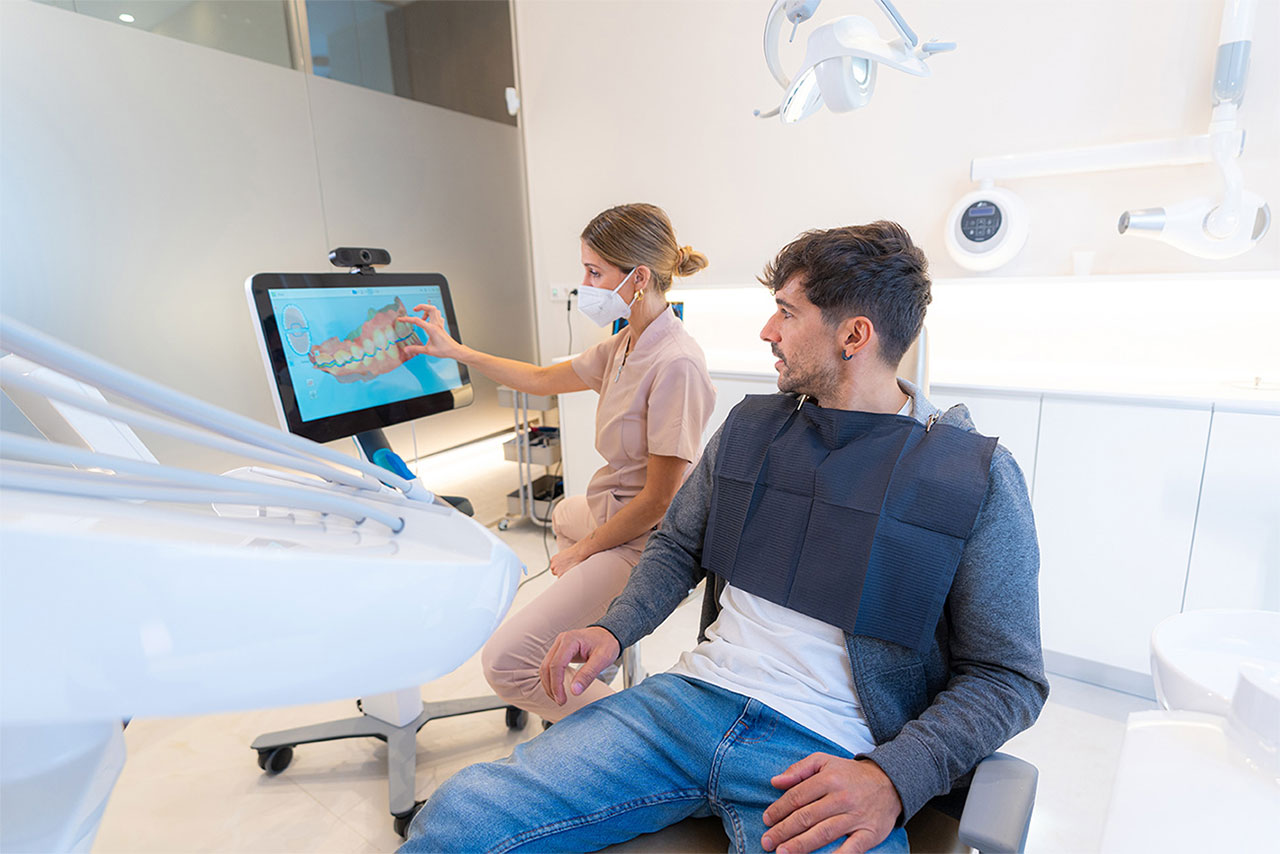
A tooth that feels fine most of the day but suddenly hurts when you chew can be confusing. Biting pain may come from a crack, cavity, irritated dental pulp, damaged restoration, infection, or even a bite that is putting too much pressure on one tooth. Because some causes can become more serious without treatment, Dentistry by Design provides emergency dentistry for dental problems that need prompt evaluation.
Pain when biting is a symptom rather than a diagnosis. The location, intensity, timing, and type of discomfort can provide helpful clues, but patients generally cannot determine the exact cause by sensation alone. A brief sharp pain when releasing a bite may suggest something different from a constant throbbing ache. Understanding the possibilities can help you decide when an appointment should be scheduled.
Teeth normally tolerate significant chewing forces. However, inflammation, structural damage, or an uneven bite can make ordinary pressure uncomfortable.
When you bite, force travels through the crown of the tooth, root, ligament around the root, and supporting bone. A problem involving any part of that system may become more noticeable under pressure.
This explains why a tooth can sometimes feel completely normal until food is placed on it.
Yes. As decay removes healthy tooth structure, the tooth can become more sensitive and structurally weaker.
A small cavity may cause no symptoms at all. As decay progresses deeper, the tooth may respond to sweets, temperature changes, or pressure.
If a large portion of the tooth is damaged, chewing may place stress on weakened enamel or dentin.
Because cavities cannot always be seen without dental instruments or imaging, biting pain is a reason to have the tooth evaluated even if there is no obvious hole.
Yes, and this pattern can be particularly frustrating because some cracks are extremely difficult to see.
When pressure is applied to a cracked tooth, sections of the tooth may flex slightly. That movement can irritate the internal tissues and produce a sharp sensation.
Some patients notice pain while biting down. Others feel a brief, distinctive pain as they release the bite.
Cracks vary significantly in depth and direction. A shallow crack may require a different treatment than a fracture extending deeply through the tooth or root.
Therefore, early evaluation is important. Continuing to chew heavily on a damaged tooth can sometimes allow the fracture to worsen.
A tooth may sometimes feel tender after a filling, particularly while the tissues settle following treatment.
One possible reason for discomfort is that the filling contacts the opposing tooth slightly earlier than surrounding teeth.
Even a small difference can create repeated pressure every time the patient closes their mouth or chews.
If a recently restored tooth feels noticeably higher than other teeth, or if biting discomfort does not begin to improve, contacting the dental office is appropriate.
An adjustment may be needed to balance the bite.
Dental crowns are designed to restore the shape and function of damaged teeth. However, a crowned tooth can still develop symptoms.
A bite that places excessive pressure on the crown can cause tenderness. The underlying tooth may also have an unrelated problem, such as recurrent decay, inflammation, or a crack.
In addition, the tissues around a tooth can become temporarily sensitive after restorative treatment.
Persistent biting pain should not be ignored simply because a tooth has already received a crown. The restoration and supporting tooth should both be evaluated.
Inside every natural tooth is a space containing dental pulp, which includes nerves and blood vessels.
Deep decay, fractures, trauma, and extensive restorative work can irritate this tissue.
Mild inflammation may sometimes settle when the underlying cause is treated. More severe or irreversible inflammation may cause lingering temperature sensitivity, spontaneous pain, throbbing, or discomfort while biting.
If the pulp becomes infected or cannot recover, root canal therapy may be considered to preserve the tooth.
Yes. Infection around a tooth root can make the supporting tissues extremely sensitive to pressure.
A tooth may feel sore, elevated, or uncomfortable even when the patient lightly taps the teeth together.
Other possible signs include swelling, a pimple-like bump on the gum, drainage, a bad taste, or persistent throbbing.
However, dental infections do not always produce every symptom. Some can progress with surprisingly little pain.
Swelling in the face or jaw, fever, difficulty swallowing, or difficulty breathing requires urgent attention.
Grinding and clenching can overload individual teeth and the ligaments that support them.
After a period of heavy clenching, a tooth may feel bruised or tender when pressure is applied even if there is no cavity.
Grinding can also contribute to cracks, fractures, and damage to restorations, which means more than one cause can sometimes exist at the same time.
Signs such as worn tooth surfaces, morning jaw fatigue, headaches, or repeated restoration damage may prompt the dentist to evaluate bruxism as part of the diagnosis.
Yes. The tissues surrounding teeth can become inflamed because of gum disease, trapped food, infection, or other periodontal concerns.
If the supporting ligament or gum tissue is irritated, chewing pressure can become uncomfortable.
Food packed tightly between two teeth can also produce localized soreness that may seem as though it is coming directly from the tooth.
A dental examination can help distinguish between pain originating inside the tooth and discomfort coming from surrounding tissues.
Waiting to see whether biting pain disappears may be reasonable for very mild short-term tenderness after known dental treatment, but persistent or unexplained pain deserves evaluation.
The first step is usually a detailed conversation about the symptoms.
The dentist may ask whether pain occurs when biting down, releasing pressure, drinking something cold, eating sweets, or doing nothing at all.
They may examine the tooth for decay, fractures, damaged restorations, gum inflammation, or unusual wear.
The bite can also be checked to determine whether the tooth is receiving more pressure than nearby teeth.
Dental X-rays may provide additional information about roots, bone, decay, and other structures that cannot be directly seen.
In certain cases, additional tests may be used to evaluate the response of the dental pulp.
Until the cause is known, avoiding heavy chewing on a painful tooth is generally sensible.
Hard foods can place additional stress on a cracked or weakened tooth.
However, avoiding the tooth is not a substitute for diagnosis. A patient may discover that chewing on the other side reduces discomfort temporarily, but the underlying problem may still be progressing.
If pain repeatedly returns whenever pressure is applied, schedule an evaluation.
Sometimes temporary irritation improves. For example, mild tenderness following restorative treatment may settle as the tooth and supporting tissues recover.
However, disappearance of pain does not always mean the underlying problem has resolved.
A severely damaged or infected pulp can eventually stop responding because the nerve tissue is no longer healthy. In that situation, symptoms may decrease temporarily even though infection remains.
Therefore, unexplained significant pain that suddenly disappears should still be mentioned to a dentist, particularly if the tooth previously had severe symptoms.
Not every sore tooth requires emergency treatment. However, certain symptoms justify faster attention.
Contact a dentist promptly if biting pain is accompanied by:
Difficulty breathing or swallowing, rapidly spreading swelling, or other severe systemic symptoms may require immediate medical evaluation.
Treatment depends entirely on the diagnosis.
A cavity may require a filling. A larger area of structural damage may need a crown. An uneven restoration may need an adjustment.
A tooth with severe pulp inflammation or infection may require root canal therapy. Certain fractured or non-restorable teeth may need extraction.
Gum-related problems require treatment directed at the surrounding tissues rather than the tooth itself.
Because these treatments are so different, accurately identifying the cause is more important than simply trying to suppress the discomfort.
Pressure-related pain may be caused by a crack, cavity, inflamed pulp, damaged restoration, bite imbalance, infection, grinding, or inflammation around the tooth. An examination is needed to identify the cause.
A crack is one possibility, especially when pain is brief and triggered by biting or release. However, other dental problems can cause similar symptoms, so the tooth should be evaluated.
Temporary sensitivity can occur after a filling. If the restoration feels too high or biting pain persists, the dentist may need to check and adjust the bite.
Yes. Infection or inflammation around a tooth root can make the tooth and supporting tissues sensitive to pressure.
Repeated biting pain should be checked even if it is intermittent. Some cracks, cavities, and pulp problems can begin with occasional symptoms before becoming more noticeable.
A tooth should not repeatedly hurt every time you chew. Because pressure-related pain can come from several very different problems, the safest approach is to identify the cause rather than relying on guesswork. Early evaluation may make it easier to protect the tooth, relieve discomfort, and prevent additional damage.
If a tooth hurts when you bite, feels different from neighboring teeth, or has developed swelling or sensitivity, Book an Appointment with Dentistry by Design. Visit our Denville office at 4 2nd Ave, Suite 206, Denville, NJ 07834 and call (973) 625-3335, or visit our South Plainfield office at 295 Durham Ave, Building 7, Suite B, South Plainfield, NJ 07080 and call (732) 826-1095. You can also Contact Us online to request an appointment.